The Complete Guide to POTS Line Replacement in 2026
Direct Answer
POTS line replacement means moving the devices that ran on a copper phone line — desk phones, fax machines, fire and burglar alarm panels, elevator emergency phones, POS terminals and modems — onto a modern digital transport while keeping those devices working exactly as they did. Carriers are retiring copper (AT&T stopped taking new copper orders in October 2025 and targets exiting most copper by 2029), so this has moved from a “someday” project to an urgent one. For mission-critical and life-safety lines, the safest replacement is a managed cellular appliance like POTS IN A BOX® that preserves the exact analog behavior — DTMF, line seizure, supervision, ring-down, fax and E-911 — over 5G/LTE, with battery backup and automatic failover.
If you’re responsible for keeping a building’s phones, alarms, or elevators connected, POTS line replacement has probably moved from a someday project to an urgent one. This guide is the hub for everything DataRemote publishes on the copper transition: what POTS lines are, why they’re disappearing, how the replacement options actually compare, and a practical, code-aware plan for migrating off copper without breaking the devices that depend on it.
Key Takeaways
- POTS = the copper analog phone line that phones, fax, alarms, elevators, POS terminals and modems were built to depend on.
- Copper is being retired on a rolling schedule, not a single national off-date. AT&T stopped accepting new copper orders in October 2025 and targets exiting most copper by 2029; your local wire center’s notice can arrive with as little as 90 days’ warning.
- The three replacement paths are VoIP, fiber/broadband, and managed cellular. For life-safety and analog-signaling endpoints, managed cellular (POTS IN A BOX®) is usually the safest because it preserves the analog interface.
- A generic VoIP adapter can fail fire and elevator code — regulated lines typically need certified hardware (UL-864), working E-911, and redundancy.
- The cost of staying on copper rises every year because copper’s costs are fixed while its user base shrinks; migrating early is a cost decision as much as a compliance one.
- Start with an inventory, rank by risk, migrate life-safety lines first, and verify failover, battery backup and E-911 before the copper is cut.
What is a POTS line?
POTS stands for Plain Old Telephone Service — the traditional analog telephone line delivered over copper wire. For decades it was the universal interface for anything that needed to make or receive a call: desk phones, fax machines, fire and burglar alarm panels, elevator emergency phones, point-of-sale terminals, ATMs, and modems.
POTS lines are valued for their simplicity and reliability — line power, a dial tone, and predictable analog signaling. That same simplicity is why so many critical devices were built to depend on them, and why “just unplugging” copper is not an option for the systems that still ride on it. For the longer history of how dial tone came and is now going, see the death of dial tone as we know it.
Why are POTS lines being retired?
Carriers are decommissioning copper because it has become expensive to maintain for a shrinking base of users, and regulators have cleared a faster path to retire it. Three forces are converging:
- The economics are upside-down. Most of copper’s cost is fixed — powering central offices, staffing wire centers, dispatching repair crews — so as customers leave, the cost per remaining line climbs. We break the numbers down in the economics of copper retirement.
- Carriers are actively exiting. AT&T stopped accepting new copper line orders in October 2025 and has stated it aims to exit most copper operations by 2029 — a target that excludes California, where the transition is still being contested at the FCC. See what AT&T’s copper retirement means for you.
- Regulation is accelerating it. The FCC’s technology-transitions framework and the March 2026 Network and Services Modernization Order removed filing and approval steps that used to let competitors and states delay retirement. We cover the regulatory detail in what the FCC’s copper-retirement rules mean for businesses.
Crucially, this is not one national “off” date. Copper is being retired region by region, wire center by wire center — a pattern playing out from Orlando, Florida to cities and agencies nationwide and, in fact, across the globe. Under FCC rules (47 CFR §51.333), a carrier generally must give at least 90 days’ notice before retiring copper facilities that are still in service — so your local deadline can arrive with relatively little warning.
What’s actually at risk when copper goes dark?
POTS replacement is often dismissed as “just a phone swap.” It isn’t. The lines most likely to still be on copper are exactly the ones with the highest consequences if they fail:
- Fire alarm panels — analog dialers that must reach a monitoring center
- Elevator emergency phones — code-required, two-way communication
- Burglar / intrusion alarms — security and monitoring lines
- Medical alert and nurse-call systems — life-safety in healthcare and senior living
- Fax lines — still mandatory in healthcare, legal, and government workflows
- Modem / M2M / SCADA — building controls, access control, metering
- POS and ATM lines — payment and transaction connectivity
- Ring-down and emergency lines — dedicated, always-on circuits
For life-safety systems, a dead line isn’t an inconvenience — it’s a compliance failure and a liability. That’s why copper retirement is a code problem, not just an IT project.
What are the POTS replacement options?
There are three common paths off copper. They are not interchangeable — the right one depends on what the line actually does.
| Option | Best for | Watch out for |
|---|---|---|
| Hosted VoIP / SIP | Office desk phones, hunt groups, softphones | Frequently not designed for alarm panels, ring-down, fax, or E-911 with accurate location; depends entirely on your LAN/power staying up |
| Fiber / wired broadband | High-bandwidth data; sites where fiber is already available | Availability is location-dependent; analog devices still need an adapter; a wired-only path has no built-in failover if that circuit drops |
| Managed cellular POTS replacement (POTS IN A BOX®) | Fire panels, elevators, alarms, fax, POS, ring-down, and voice — especially life-safety and multi-site | Requires adequate cellular coverage at the site (mitigated by multi-carrier support and antennas) |
For mission-critical and life-safety endpoints, the managed cellular path is usually the safest, because it keeps the analog interface intact and adds battery backup and automatic failover that copper never had. VoIP and fiber still have their place — for back-office voice or high-bandwidth data — and many buildings end up with a mix.
How does POTS IN A BOX® work?
DataRemote’s POTS IN A BOX® appliances act as a drop-in replacement for the copper line:
- Your analog device plugs into an RJ-11 FXS port on the appliance — no rewiring, no new permits, no rip-and-replace.
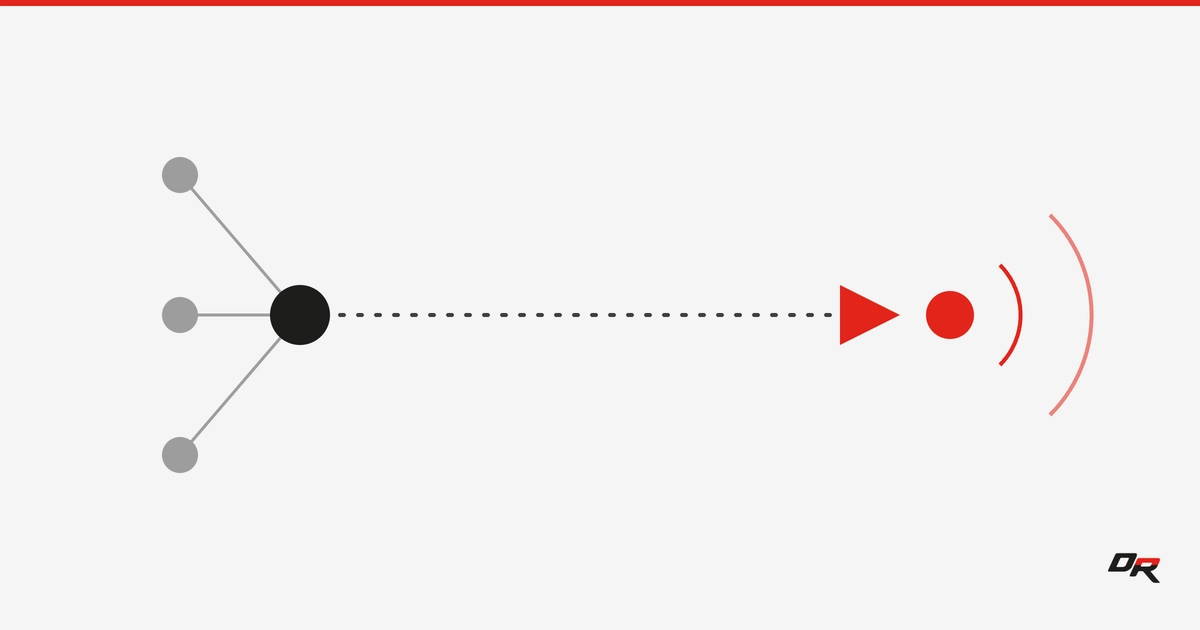
- The appliance converts the analog signal and carries it over a managed cellular (5G/LTE) connection, with optional wired backhaul.
- A firewalled network of servers routes traffic to and from the phone network, enabling call origination and completion through the PSTN.
- Battery backup and automatic failover keep the line up during power and internet outages.
- E-911 with geo-location and analog behaviors — DTMF, line seizure, supervision, ring-down, fax tones (FSK/PSK) — are preserved.
Because the analog interface is unchanged, connected devices behave exactly as they did on copper. And because the appliances are managed centrally through the Ara platform, a silent copper line that could fail unnoticed becomes infrastructure you can monitor and troubleshoot remotely.
What should you look for in a POTS replacement?
Use this as a buyer’s checklist when evaluating any solution:
- Preserves analog signaling — DTMF, line seizure, supervision, ring-down, and fax (FSK/PSK)
- E-911 support with accurate geo-location
- Battery backup sized to your outage risk (DataRemote appliances offer up to 48 hours)
- Automatic failover — multi-carrier cellular, and cellular-plus-wired paths
- Relevant certifications — carrier certification for reliable connectivity, and life-safety listings like UL-864 for fire and elevator lines
- Centralized management — line-status monitoring and proactive alerts
- Compliant hardware — NDAA §889 and TAA where procurement requires it
Why can a cheap VoIP box fail fire code?
The instinct is to grab the least expensive VoIP adapter and call it done. For a back-office phone, fine. For a fire panel or elevator phone, that’s a real risk. Life-safety endpoints are governed by code and by the Authority Having Jurisdiction (AHJ), which typically require certified equipment (fire communication paths commonly require UL-864 listing), working E-911 with accurate location, and redundancy so the line can’t simply drop when power or one network fails. A generic VoIP box usually isn’t built or certified for any of that. The right replacement is code-aware, engineered for the endpoint it’s protecting — not guesswork.
How much does POTS line replacement cost?
Most organizations move from escalating, unpredictable per-line copper charges to a predictable managed plan, often reducing per-line spend on the order of 30–50% while gaining battery backup, failover, and monitoring they didn’t have before. And because copper’s costs are fixed while its subscriber base shrinks, the cost per remaining copper line rises every year — so waiting tends to increase your cost, not hold it flat. For the full economic picture, see the economics of copper retirement in a fiber world.
How do you plan a POTS line migration?
You don’t have to migrate everything overnight — but you do need to get ahead of your wire center’s shutdown. Here’s the practical sequence:
- Inventory every analog line. Walk each building and site, and tag every POTS line to what it actually does — fire panel, elevator, alarm, fax, POS, voice. You can’t protect what you haven’t found.
- Rank by risk and compliance. Life-safety and code-required lines (fire, elevator, alarm, medical) go first — these are the ones that turn a copper shutoff into a compliance failure.
- Match each endpoint to the right appliance. DataRemote offers a range of POTS IN A BOX® appliances from compact units to high-capacity multi-line models such as the 90X1 5G POTS replacement.
- Deploy as a drop-in and verify. Install the appliance, confirm failover, battery backup and E-911, and document compliance — before your local wire center goes dark.
For a building-owner’s version of this playbook, see the AT&T copper shutdown building guide; for a multi-site enterprise, see the enterprise copper-sunset migration guide.
Getting started
Start by inventorying your lines and identifying life-safety obligations, then match each endpoint to the right appliance. DataRemote offers a range of POTS IN A BOX® appliances built for exactly this transition. For a plain-English primer on the hardware, see POTS IN A BOX®: the modern alternative to copper phone lines. When you’re ready, contact us and we’ll help you scope the migration on your schedule — not your carrier’s.
Frequently Asked Questions
POTS line replacement is the process of moving devices that used to run on a copper Plain Old Telephone Service (POTS) line — phones, fax machines, fire and burglar alarm panels, elevator emergency phones, POS terminals, ATMs and modems — onto a modern digital transport such as managed cellular (5G/LTE), fiber, or VoIP. The goal is to keep those analog devices working exactly as they did on copper while removing the aging copper line underneath them. A purpose-built appliance like POTS IN A BOX® presents the same RJ-11 analog interface the device expects and carries the traffic over cellular or broadband instead of copper.
Carriers are retiring copper. AT&T stopped accepting new copper POTS orders in October 2025 and has said it aims to exit most copper operations by 2029 — a target that explicitly excludes California, where its copper discontinuance is still being contested at the FCC. The FCC's March 2026 Network and Services Modernization Order streamlined the filing and approval steps that used to let competitors and states slow retirements down. Meanwhile, the price of the copper lines that remain has climbed sharply. Retirement is a rolling, wire-center-by-wire-center process, so your local deadline may arrive with as little as 90 days' notice.
There are three common paths: hosted VoIP/SIP (good for office phones, usually not suited to alarm panels, ring-down or fax); fiber or wired broadband (depends on availability and still needs an analog adapter for legacy devices); and managed cellular POTS replacement such as POTS IN A BOX®, which is purpose-built to carry analog signaling — DTMF, line seizure, supervision, ring-down, fax — over 5G/LTE with battery backup and automatic failover. For mission-critical and life-safety endpoints, the managed cellular path is usually the safest because it preserves the analog interface those devices were engineered for.
Often no. Life-safety endpoints such as fire alarm panels and elevator emergency phones are governed by code and by your local Authority Having Jurisdiction (AHJ), which typically expect certified equipment (fire communication paths commonly require UL-864 listing), working E-911, and redundancy so the line does not simply drop when power or one network fails. A cheap VoIP box usually is not built or certified for that. Use a code-aware replacement engineered for the endpoint it protects.
Most organizations move from escalating, unpredictable per-line copper charges to a flat managed plan and reduce their per-line spend meaningfully — commonly on the order of 30–50% — while gaining battery backup, failover and centralized monitoring they did not have on copper. Because copper's costs are mostly fixed and its subscriber base is shrinking, the cost per remaining copper line rises every year, so waiting tends to raise your cost rather than hold it flat.
Start by inventorying every analog line and what it connects to, ranking them by risk (life-safety and code-required lines first), then matching each endpoint to the right appliance and deploying as a drop-in replacement you verify before the copper is cut. A single site can often be migrated in a day per location because the appliance is drop-in — your existing wiring and devices stay in place. Multi-site enterprises typically phase the rollout, starting with sites facing the earliest carrier shutdown notices.
Related
Solutions
Plan your POTS line replacement with DataRemote
Tell us what analog lines you're running — phones, alarms, elevators, fax, POS — and our engineers will map each one to the right POTS IN A BOX® appliance and a migration plan you control.