
5G & LTE Broadband
Fixed Wireless Access
Deploy secure, reliable 5G/LTE broadband to any fixed location — without waiting for fiber, cable, or wired infrastructure.
Trenching required
Zero
Battery backup
48 hrs
Network ready
5G / LTE
Automatic failover
Instant
Definition
What is Fixed Wireless Access (FWA)?
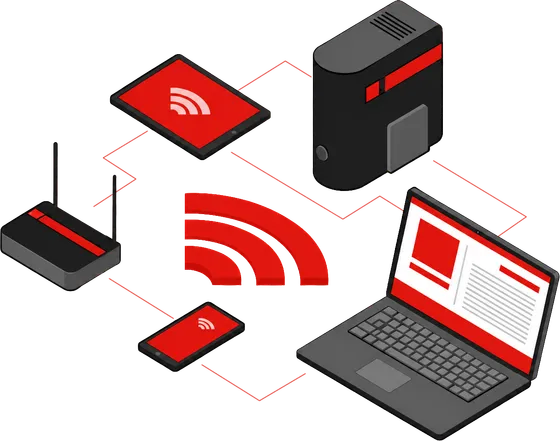
Fixed Wireless Access (FWA) is a broadband internet service that uses 4G LTE or 5G wireless networks to connect a fixed location — such as a business, branch office, or home. Because FWA does not require copper, cable, or fiber to the premises, it deploys quickly as a primary internet connection, backup connection, or alternative to wired broadband. In practice, an FWA appliance installs on site, connects to the carrier's cellular network, and presents ordinary Ethernet and Wi-Fi to the local network — the site's devices connect exactly as they would to a wired router. DataRemote appliances add automatic failover between wired and cellular paths, dual-SIM carrier diversity on supported models, and integrated battery backup, so the device delivering the bandwidth also carries the site through outages. The forces retiring copper phone lines are reshaping wired data services too — see the FCC's technology transitions docket — which is why sites increasingly pair FWA with POTS replacement on one integrated access device.
Applications
When should a business use Fixed Wireless Access?
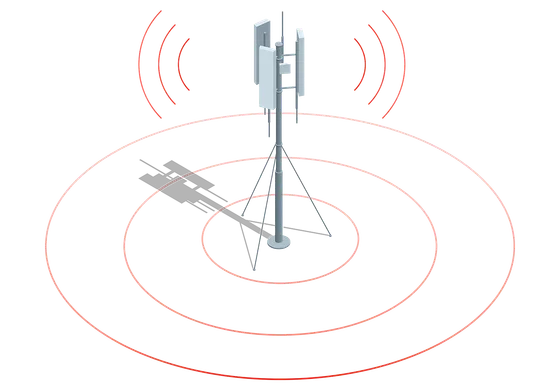
A business should use Fixed Wireless Access in three situations. First, rural and remote connectivity: FWA delivers high-speed broadband to locations where fiber, cable, or DSL service is unavailable, unreliable, or too costly to install — the cellular network is the last mile. Second, temporary and rapid deployments: construction sites, events, pop-up locations, and temporary offices get reliable internet in days rather than waiting on wired infrastructure build-out, and the appliance redeploys when the site moves. Third, business continuity: FWA runs as a secondary connection that keeps payment processing, VoIP, and cloud operations online during fiber, cable, or wired network outages, switching over automatically. Many sites combine the last two roles permanently — a wired primary with FWA failover — and because DataRemote appliances also carry analog RJ-11 lines, the same device can handle POTS replacement at that site.
Rural and Remote Connectivity
Fixed Wireless Access delivers high-speed broadband to rural and remote locations where fiber, cable, or DSL service is unavailable, limited, or too costly to install.
Temporary and Rapid Deployments
FWA provides fast, reliable internet for construction sites, events, pop-up locations, and temporary offices without waiting for wired infrastructure.
Business Continuity and Internet Backup
Businesses can use FWA as a secondary internet connection to maintain critical operations during fiber, cable, or wired network outages.
Decision Guide
How does FWA compare to wired broadband?
Neither delivery model wins everywhere — the comparison below is about fit. Many sites run both, with FWA as the failover path for a wired primary. Note that DSL rides the same copper plant carriers are retiring under the FCC's copper retirement framework, so a DSL-served site is choosing a replacement either way.
| Wired broadband (fiber / cable / DSL) | Fixed Wireless Access | |
|---|---|---|
| Time to deploy | Weeks to months — construction, permits, and installation scheduling | Days — appliance ships pre-provisioned; no trenching or cabling |
| Last-mile construction | Trenching or aerial build-out to the premises | None — connects over the carrier 5G/LTE network |
| Power outages | Depends on premises equipment and upstream plant | Up to 48-hour integrated battery with UPS output on the 90X1/90X2 |
| Redundancy | Second wired circuit, often from the same conduit | Dual-SIM carrier diversity on supported models |
| Portability | Fixed to the served address | Redeployable — suited to temporary sites and pop-ups |
| Best fit | High, sustained bandwidth at established sites | Primary service where wires are impractical; failover anywhere |
Before You Choose
What should you verify before choosing FWA?
Signal at the exact install location
Carrier coverage and signal strength at the appliance's mounting point — not just the ZIP code — is the single biggest determinant of FWA performance. Survey before committing.
Bandwidth and data plan fit
Estimate the site's real throughput and monthly data needs against available carrier plans, especially if FWA will carry primary traffic rather than occasional failover.
Primary vs. backup role
Decide whether FWA is the site's primary connection or its failover path — the answer drives plan sizing, appliance model, and how traffic priorities are configured.
Ports and battery for the site
Match the appliance to the site: analog RJ-11 lines to replace, Ethernet/Wi-Fi needs, and required battery runtime all vary by model.
Features & Benefits
Everything you need. No trenching required.
Deploy secure, reliable 4G LTE and 5G broadband without waiting for fiber, cable, or other wired infrastructure.
Reduced Infrastructure Costs
High-Speed Wireless Broadband
Broad Network Coverage
Fast, Simple Deployment
Reliable Business Connectivity
Flexible, Future-Ready Connectivity
Hardware
FWA-Ready Appliances
Recommended Appliances
 5G RedCap
 90X5
Modular POTS IN A BOX® / Business Gateway Platform
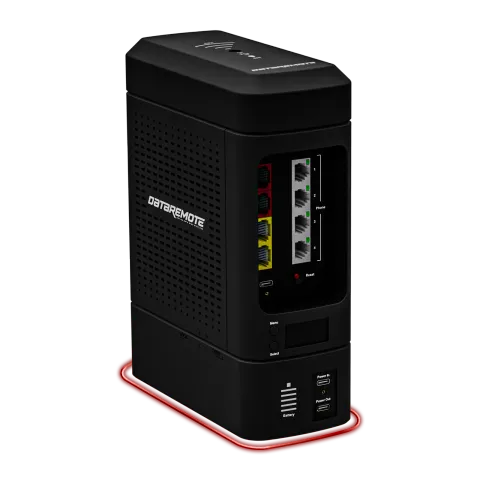
Modular PIAB and business gateway platform: Gigabit Ethernet Connectivity, 5G RedCap WWAN with LTE fallback, 4-8 FXS voice lines, and swappable power/battery modules. Built for telephone line replacement, fixed wireless access, and internet backup.
 4-8 FXS
  5G RedCap
  24hr Battery
 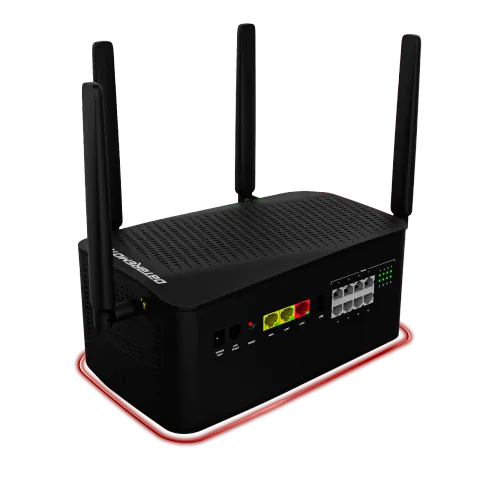 5G
5G 90X1
5G POTS replacement with automatic internet failover
Enterprise 5G appliance that replaces up to 8 analog POTS lines with an integrated ATA. Includes 48-hour battery backup, a global 5G radio, UPS power output, and automatic cellular internet failover.
8 FXS 5G NR 48hr Battery 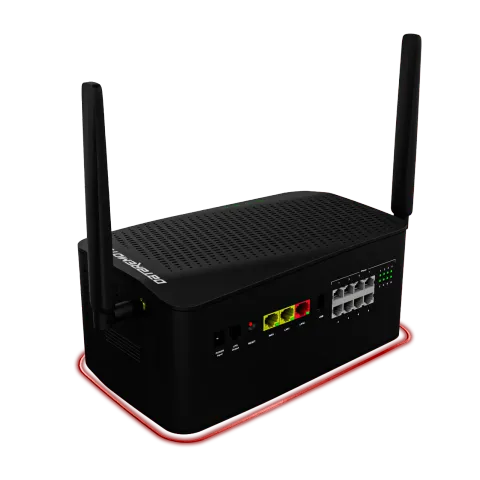 LTE
LTE 90X2
LTE POTS replacement with automatic internet failover
The LTE sibling of the 90X1. It replaces up to 8 analog POTS lines with an integrated ATA and adds patented UPS power output, 48-hour battery backup, and automatic cellular failover on North American LTE bands.
8 FXS  LTE 48hr Battery
 Solutions
Purpose-built for the lines that can't go dark
Most deployed
POTS Line Replacement
Migrate copper voice, fax, alarm and elevator lines to a managed 5G/LTE appliance — preserving every signal your life-safety devices depend on.
Solution
Internet Backup & Cellular Failover
Up to 24–48 hours of battery backup, depending on model and load, with automatic cellular failover.
Learn more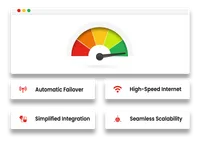
Solution
Elevator Emergency Communication
Keep elevator emergency phones connected and inspection-ready as copper POTS lines retire.
Learn more
Video
See it in action
CDS-9010 Installation Video — AT&T Wireless Broadband
How to install the CDS-9010 for AT&T Wireless Broadband (AWB) — SIM insertion, antenna placement, network cabling, and confirming the LTE link.
Watch with transcript (4:21)90X1 Fixed Wireless Access & Cellular Failover — Video
The 90X1 as fixed wireless access and automatic internet failover — one 5G appliance carrying analog lines and keeping the site's internet online.
Watch with transcript (1:28)Bridging the Digital Divide: Internet for Students — Video
Connectivity is a prerequisite for learning — how DataRemote cellular appliances bring reliable internet to students and campuses without wired service.
Watch with transcript (0:54)Frequently asked questions
What is Fixed Wireless Access (FWA)?
How does cellular failover work?
Can one appliance handle both internet failover and POTS replacement?
Is there a battery backup for outages?
Ready to deploy Fixed Wireless Access?
Talk to a DataRemote specialist about coverage, deployment, and the right appliance for your sites.