POTS IN A BOX®: The Alternative to Copper Lines

Direct Answer
Copper POTS lines are being retired and repriced as carriers exit the copper network. DataRemote’s POTS IN A BOX® replaces them with a cellular/IP appliance that keeps your existing analog equipment working. The current devices — the 90X1 (5G) and 90X2 (LTE) — each replace up to 8 analog lines with up to 48-hour battery backup, UPS power output, dual-SIM multi-carrier failover, and support for voice, fax, alarms, ring-down, modem/M2M, and utility metering.
Key takeaways
- POTS lines still carry critical services: security and fire alarms, elevator phones, fax, modems, and automatic utility meter reading.
- The FCC’s 2019 forbearance order removed carriers’ obligation to maintain copper, ensuring its decline — and driving prices up.
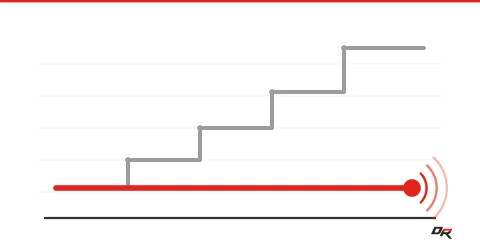
- Some copper POTS lines now cost $2,700+ per month, making replacement an easy ROI decision.
- DataRemote’s current answer is the 90X1 and 90X2 — 8-line appliances with 48-hour battery backup and multi-carrier failover.
- POTS IN A BOX® is a drop-in replacement: keep the analog equipment you already have.
What are POTS lines?
POTS (Plain Old Telephone Service) is the analog telephone service that most likely still runs through your home or office. It’s simple analog service that may include features like call forwarding, voicemail, or three-way calling. Crucially, many industries still rely on POTS lines for services well beyond voice:
- Security and burglar alarms
- Fire alarm panels
- Elevator emergency phones
- Fax machines and legacy analog modems
- Temperature and water sensors
- Automatic meter reading for gas, electric, and water utilities
- Ring-down circuits for gates, courtesy phones, and call boxes
How FCC forbearance drives the retirement of copper POTS lines
Carriers are shifting away from POTS lines toward newer services. The FCC forbearance order granted in 2019 (FCC 19-72A1) relieved Local Exchange Carriers of the obligation to maintain copper POTS lines — effectively guaranteeing the network’s deterioration over time. Subsequent FCC actions have gone further, shortening the notice period carriers must give before retiring copper.
The predictable result: as the copper base shrinks and support ends, prices for remaining lines rise sharply — into the thousands of dollars per line per month in some markets. That cost pressure is prompting organizations to explore alternatives. For the full picture, see our guide on what the FCC’s 2025 copper retirement means for businesses.
The POTS IN A BOX® replacement solution: 90X1 and 90X2
DataRemote’s current POTS IN A BOX® appliances are the 90X1 and 90X2. At first glance each looks like an ordinary router — a carrier SIM provides cellular service, and the device is easy to set up and manage. Plug in an analog phone and you get clear calls; plug in an alarm panel, fax, or meter and it keeps signaling as it always did. Behind the scenes, the traffic rides modern cellular and IP networks instead of copper.
90X1 vs. 90X2 at a glance
| 90X1 | 90X2 | |
|---|---|---|
| Network | 5G with automatic LTE failover | LTE (bands 2/4/5/12/13/14/66/71) |
| Analog (FXS) lines | Up to 8 | Up to 8 |
| Battery backup | Up to 48 hours | Up to 48 hours |
| Power output | UPS output for approved devices | Patented UPS output |
| SIM / carrier | Dual-SIM, multi-carrier (Verizon, AT&T, T-Mobile) | Dual-SIM, multi-carrier incl. FirstNet |
| Best for | Sites wanting 5G performance and headroom | LTE-focused or FirstNet deployments |
Both are a major upgrade over earlier single-line hardware: 8 analog ports, longer battery life, UPS power output, and full multi-carrier failover in one appliance.
Features
- Integrated NAT router / firewall with WAN
- Up to 48-hour battery backup + UPS power output
- DHCP server and client
- Dual-SIM, multi-carrier capable
- Direct plug & play
- Web-based management + customer dashboard
- Mass device management via Ara
Capabilities
- Automatic internet failover (cellular)
- Utility automatic meter reading
- Legacy analog modem support (alarm systems, utility meters)
- Ring-down (control gates/locks, courtesy phones, call boxes)
- Legacy fax transmission
- DTMF (Dual-Tone Multi-Frequency) signaling
- Native analog M2M and SCADA telemetry
- Burglar and fire alarm signal transmission
- Elevator, paging, and auto-dial phone lines
How to choose the right appliance
The 90X1 and 90X2 cover most business deployments, but the lineup is wider than two devices and the selection usually comes down to four questions.
How many analog lines does the site need? The 90X1 and 90X2 each provide up to 8 RJ-11 FXS ports, as does the plug-and-play VAB-1. The modular 90X5 starts at 4 FXS ports and expands to 8 via RJ-14 for higher-density sites.
Does the site need 5G, or is LTE sufficient? The 90X1 is 5G Sub-6 GHz (NSA and SA); the 90X2 is the LTE counterpart with the same core continuity features at lower cost; the 90X5 uses 5G RedCap with LTE fallback. For a fire panel that sends short bursts of signaling data, LTE is typically ample — 5G matters more when the same appliance is also carrying the site’s internet.
How long does it need to survive a power loss? The 90X1, 90X2 and 90X5 offer up to 48 hours of battery standby; the VAB-1 provides up to 24 hours with a hot-swappable battery. Match this to how long outages actually last in that location, not to the highest number available.
Who owns the installation? The VAB-1 is built for plug-and-play replacement of a single analog line — the right answer for small sites and specialty lines. The 90X1/90X2 suit multi-line and regulated endpoints where you want your own management visibility. The 90X5 is a modular gateway for sites that want routing, voice, and failover consolidated into one platform.
Two constraints override all four for life-safety work: the appliance must carry the certifications your Authority Having Jurisdiction expects — UL-864 and, in California, CSFM listing — and it must have usable signal at the mount point, not merely at the property.
What a deployment actually involves
The most common surprise is how little changes at the endpoint.
- Install behind the demarc. The appliance takes the place of the incoming copper line, on the network side of your existing wiring.
- Connect the existing devices. Analog endpoints plug into the RJ-11 FXS ports exactly as they plugged into the copper line. The fire panel, elevator phone, fax machine, or alarm keeps its own wiring and configuration.
- Provision and verify. Each unit is provisioned and monitored through Ara, then verified per line — a supervised test to the monitoring center for alarm circuits, a real transaction for data endpoints, an E-911 test call where emergency calling is required.
- Document for the AHJ. For code-required lines, capture the certification records, the line-by-line mapping, and the test results before inspection.
No permits for the endpoint, no rip-and-replace, no retraining staff on new equipment — because from the device’s perspective, nothing happened.
Three common misconceptions
“It’s just a VoIP adapter.” It isn’t, and the distinction is the whole point. A generic VoIP adapter delivers a dial tone; a POTS replacement built for these endpoints reproduces the analog behaviors they depend on — line seizure, supervision, DTMF and modem tones, ring-down — and carries the certifications life-safety circuits require. That gap is why cheap adapters pass a phone test and then fail a fire inspection.
“We’ll have to replace our panels and phones.” No. The equipment stays. The only thing that changes is what’s behind it.
“It’s only for voice.” Also no. The same appliances carry fax, DTMF signaling, analog M2M and SCADA telemetry, alarm signals, and elevator and ring-down lines — which is why a single site can consolidate a mixed inventory of analog lines onto one managed platform rather than solving each one separately.
A fourth assumption is worth retiring too: that this is a project to start once a shutdown notice arrives. By the time notice lands, the same 90-day window has to absorb inventory, device selection, procurement, AHJ review, installation, and per-line verification — and AHJ review alone can consume much of it. The organizations that find this straightforward are the ones that treated the inventory as routine facilities work well before any deadline existed.
Why replace copper now?
If your organization has even a few devices on POTS lines, an alternative like POTS IN A BOX® is worth evaluating today — not after a shutdown notice arrives. Organizations typically see a rapid return on investment from eliminating escalating copper charges, and gain modern features (remote monitoring, alerting, multi-carrier failover) that no copper line can offer.
For specific use cases, see how POTS IN A BOX® serves fire and burglar alarm panels and fax, POS, and ATM lines. For the bigger picture, read the death of dial tone as we know it; for the consumer AT&T angle, see how AT&T launched a new landline service powered by DataRemote. When you’re ready, contact our team for a device recommendation, or browse the full POTS IN A BOX® lineup.
Frequently Asked Questions
POTS (Plain Old Telephone Service) is the traditional analog telephone service that runs over copper wire. Beyond voice, many businesses still use POTS lines for security alarms, fire alarms, elevator phones, fax machines, modems, and automatic meter reading for gas, electric, and water utilities.
Carriers are moving off copper because it's costly to maintain and deteriorating. The FCC's 2019 forbearance order (FCC 19-72A1) relieved carriers of legacy copper-maintenance obligations, and subsequent FCC actions have shortened retirement notice periods. As a result, prices for the copper lines that remain have risen sharply — into the thousands of dollars per line per month in some markets.
The 90X1 (5G with LTE failover) and 90X2 (LTE) are DataRemote's current POTS IN A BOX® appliances. Each replaces up to 8 analog lines with an integrated ATA, up to 48-hour battery backup, UPS power output, dual-SIM multi-carrier failover, and support for voice, fax, alarms, ring-down, modem/M2M, and metering.
No. POTS IN A BOX® is a drop-in replacement — it presents the same analog interface your phones, alarm panels, fax machines, and meters already use, so the transition off copper doesn't require replacing that equipment.
Related
Products
Solutions
Definitions
Ready to replace copper with POTS IN A BOX®?
Talk to DataRemote about whether the 90X1 or 90X2 fits your lines and devices.