
Life-Safety Compliance
Elevator Emergency
Communication
Keep elevator emergency phones online as copper POTS lines retire. Cellular connectivity designed to support the requirements of ASME A17.1, IBC, and NFPA 72 — with acceptance decided by your code edition and AHJ.
ASME A17.1
Designed to support
48 hrs
Battery backup
E911
Supported configurations
Multi-line
Per appliance
What It Is
What is elevator emergency communication replacement?
Elevator emergency communication replacement moves an elevator's code-required two-way emergency phone off its copper POTS line. A managed cellular line, delivered by an on-site appliance, takes the copper line's place. The elevator phone connects to the appliance's RJ-11 port and behaves exactly as it did on copper. The cab's HELP button still places a monitored, two-way voice call to authorized personnel, while the appliance carries the call over 5G/LTE with battery backup. Dedicated-line behaviors the phone depends on — including ring-down and supervision — are preserved over the cellular path in supported configurations. The cab phone itself is not replaced, and no cab modifications are required. Technicians connect the appliance to the existing elevator phone wiring, and installation is designed to avoid taking the elevator out of service. One appliance can serve multiple cabs, which lowers per-elevator infrastructure cost.
ASME A17.1 (Safety Code for Elevators and Escalators) requires operable two-way emergency communication in elevator cabs. The IBC mandates it in passenger elevators, and NFPA 72 governs the communication systems life-safety applications rely on. All three require that communication to keep working at all times, including during power outages. The 2010 ADA Standards add accessibility requirements for the communication in the cab (see the U.S. Access Board's elevator guidance). These are code requirements the phone's line must keep satisfying. ASME A17.1 relevance is code relevance, not a product credential. As carriers retire copper, a building that leaves its elevator phone on a retiring line faces a compliance gap and potential AHJ fines. The elevator may even be ordered out of service until compliance is restored. DataRemote bridges the gap with cellular-powered POTS replacement.
ASME A17.1
Safety Code for Elevators
Requires operable two-way emergency communication in all elevator cabs
IBC
International Building Code
Mandates emergency communication in all passenger elevators
NFPA 72
National Fire Alarm Code
Governs communication systems for life-safety applications
ADA
Americans with Disabilities Act
Requires accessible emergency communication for all building occupants
The Copper Problem
What happens to elevator phones when copper retires?
Telecom carriers are actively retiring copper POTS infrastructure under the FCC's copper retirement framework. If your elevators still rely on copper phone lines for emergency communication, you need a plan now.
2025–2028
Copper POTS retirement timeline
$10K+
Potential AHJ non-compliance fines
At all times
Operability the codes demand
How DataRemote Helps
How does cellular elevator communication work?
DataRemote replaces copper POTS lines with cellular connectivity designed to support the elevator emergency communication requirements of ASME A17.1/CSA B44 and IBC-referenced codes. Final acceptance rests with the code edition in force and the authority having jurisdiction.
Emergency Phone Connectivity Designed for Code
Up to 48-Hour Battery Backup
E-911 Location Accuracy
Multi-Line / Multi-Elevator Support
Ara Remote Monitoring
Fast, Non-Disruptive Installation
Hardware
Recommended Appliances
POTS-compatible cellular appliances designed to support ASME A17.1 elevator emergency communication requirements — final acceptance rests with the code edition and the AHJ.
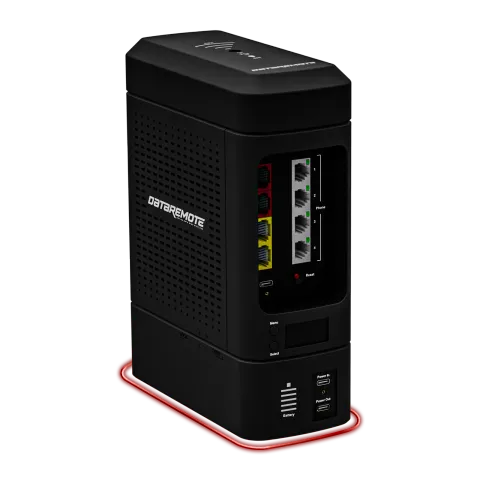 5G RedCap
 90X5
Modular POTS IN A BOX® / Business Gateway Platform
Modular PIAB and business gateway platform: Gigabit Ethernet Connectivity, 5G RedCap WWAN with LTE fallback, 4-8 FXS voice lines, and swappable power/battery modules. Built for telephone line replacement, fixed wireless access, and internet backup.
View specs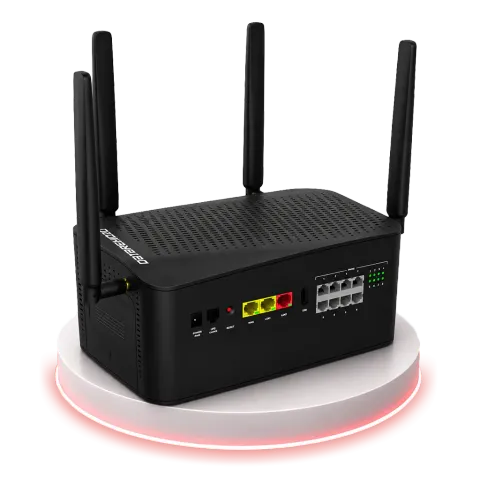 5G
5G 90X1
5G POTS replacement with automatic internet failover
Enterprise 5G appliance that replaces up to 8 analog POTS lines with an integrated ATA. Includes 48-hour battery backup, a global 5G radio, UPS power output, and automatic cellular internet failover.
View specs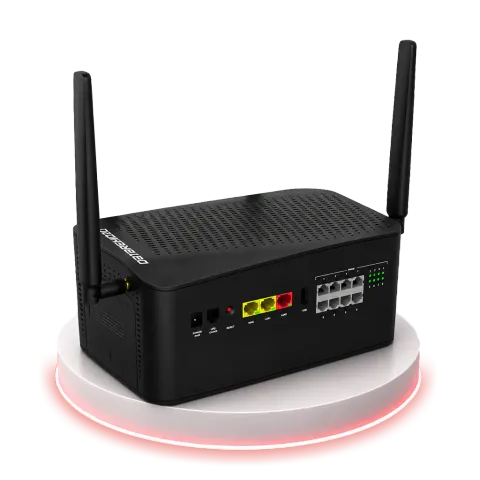 LTE
LTE 90X2
LTE POTS replacement with automatic internet failover
The LTE sibling of the 90X1. It replaces up to 8 analog POTS lines with an integrated ATA and adds patented UPS power output, 48-hour battery backup, and automatic cellular failover on North American LTE bands.
View specsSolutions
Purpose-built for the lines that can't go dark
Most deployed
POTS Line Replacement
Migrate copper voice, fax, alarm and elevator lines to a managed 5G/LTE appliance — preserving every signal your life-safety devices depend on.
Solution
Internet Backup & Cellular Failover
Up to 24–48 hours of battery backup, depending on model and load, with automatic cellular failover.
Learn more
Solution
Fixed Wireless Access
Primary or failover business internet over 5G/LTE, with automatic failover and battery backup baked in.
Learn more
Video
See it in action
Hotline & Ring-Down Feature — Video Explainer
How POTS IN A BOX® preserves hotline and ring-down (auto-dial) behavior: the off-hook circuits emergency phones and call boxes depend on.
Watch with transcript (0:46)Emergency Communication Lines After Copper — Video
How POTS IN A BOX® keeps elevator emergency phones and other code-required communication lines connected as carriers retire copper POTS lines.
Watch with transcript (2:34)Elevator Emergency Phone Lab Talk — Video
From the DataRemote lab: how elevator emergency phones are tested on POTS IN A BOX® — ring-down behavior, two-way audio and battery-backed operation.
Watch with transcript (1:50)Frequently asked questions
Are elevator emergency phones required by code?
What happens to elevator phones when copper is retired?
Does the elevator phone keep working during a power outage?
Can multiple elevator phones run on one appliance?
Compliance note: DataRemote equipment is designed to support code-governed applications; it does not by itself guarantee code compliance. Final acceptance of any installation may depend on the product model, endpoint compatibility, installation, configuration, carrier, monitoring provider, the code edition in force, the jurisdiction, and the authority having jurisdiction. Certification and listing records are model-specific; see each product page and the issuing organization's own records.
Is your elevator emergency communication system ready for copper retirement?
Talk to a DataRemote specialist about keeping your elevator phones code-compliant with cellular POTS replacement.