
Life-Safety & Compliance
Fire & Burglar Alarm
Communication
Keep fire and burglar alarm panels connected to monitoring centers as copper POTS lines retire. Cellular communication designed to support NFPA 72 and IBC transmission requirements — on UL 864 certified models identified on each product page.
NFPA 72
Designed to support
48 hrs
Battery backup (model/load-dependent)
UL 864
Certified models identified
Panel-agnostic
Supported protocols
What It Is
What is cellular alarm communication?
Cellular fire and burglar alarm communication replaces the copper POTS line a fire or burglar alarm panel uses to reach its central monitoring station. In its place: a managed cellular connection the panel recognizes as a standard analog phone line. The DataRemote appliance connects in place of the POTS line on the panel's RJ-11 jack. The panel sees ordinary dial tone and signals exactly as it did over copper — DTMF, line seizure, and supervision behaviors intact. The appliance then routes the transmission over cellular to the monitoring center. No panel reprogramming, no signaling protocol changes, and no service disruption are required in supported configurations. The stakes are simple. Fire and burglar panels depend on that path, and per NFPA 72, a panel without a working communication path cannot do the one job the code requires of it.
If your alarm panel loses its POTS line:
- Fire alarms cannot signal the monitoring center
- Burglar alarms cannot transmit intrusion alerts
- Your building may be out of NFPA 72 compliance
- Insurance coverage for monitored alarms may be voided
- AHJ may require the system to be taken offline
Signal Protocol Compatibility
DataRemote appliances work with the supported alarm signaling protocols shown below. That includes Contact ID and SIA over DTMF, plus the modem-based formats older panels use — with no panel reprogramming needed in supported configurations. The appliance connects in place of the POTS line on the alarm panel's RJ-11 jack. The panel sees a standard analog dial tone and communicates exactly as it did over copper, while DataRemote routes the signal over cellular to your monitoring center. Line seizure and panel supervision behaviors are preserved. The panel can still take the line when it needs to report, and the monitoring center still detects a path failure. The exact formats supported vary by appliance model and configuration. Confirm your panel's signaling format against the chosen model with your alarm company before cutover, and verify the first signal test end to end.
Capabilities
How does DataRemote protect alarm communication?
DataRemote appliances replace the POTS line with a managed cellular path designed to support code-governed alarm transmission in supported configurations. Final acceptance depends on the panel, the monitoring provider, the code edition, and the authority having jurisdiction.
Broad Alarm Panel Compatibility
Communication Path Designed for NFPA 72
Up to 48-Hour Battery Backup
Multi-Panel / Multi-Line Support
Ara Connectivity Monitoring
Non-Disruptive Retrofit Installation
Installer efficiency
What is Alarm Auto Detect?
Alarm Auto Detect automatically configures a DataRemote line to the correct communication protocol for a connected fire or burglar alarm panel. The installer no longer has to identify the panel's protocol and select it by hand. That makes test-and-turn-up faster and misconfigured installs less likely.
Protocol mismatch is one of the most common reasons a freshly installed line fails its first signal test. The panel dials, the format doesn't match what the line expects, and the central station never receives a usable event. The technician ends up troubleshooting a setting instead of confirming a working path. Auto Detect removes that step from the install — and removes it as a source of return trips.
Signaling formats it works across
The same DTMF and modem-based formats listed above — including Contact ID and SIA — with line seizure and panel supervision behaviour preserved. Availability and the exact formats detected vary by appliance model and configuration.
At install
- 01 Connect the panel The alarm panel's dialer connects to the appliance's RJ-11 FXS port exactly as it connected to the copper line — no rewiring, no panel reprogramming.
- 02 The line identifies the format The DataRemote line recognizes the signaling format the panel is transmitting, rather than waiting for an installer to look it up and select it by hand.
- 03 The line configures itself The line sets itself to the matching protocol and the panel reports to the central station. The installer verifies the signal instead of troubleshooting a wrong setting.
Faster
Test and turn-up
Fewer
Misconfigured installs
Remote service access
What is Alarm Inbound Programming?
Alarm Inbound Programming lets a dealer or central station reach an alarm panel remotely, the same way they would over a traditional copper phone line. The DataRemote line supports remote software programming, uploading, downloading, and verifying panel configuration end to end.
Remote panel access is the capability most often lost in a copper migration. Losing it is expensive: every programming change that used to be a dial-in becomes a truck roll. Preserving inbound access keeps the dealer's existing service workflow intact. The alarm communicator answers a call from the supervising station as it always did — the cellular path simply stands in for the copper one.
Inbound access is available on supported models and configurations, and depends on how the panel and the monitoring provider are provisioned. Fleet-wide line status is visible in Ara, so a line that stops answering is caught before a scheduled programming session fails.
The inbound path
Dealer or central station
Initiates the session
Managed cellular line
Carries the call in place of copper
Alarm panel
Answers and accepts programming
Program
Push configuration changes to the panel remotely, without a site visit.
Upload
Send a prepared configuration up to the panel from the dealer or central station.
Download
Pull the panel's current programming back for review, records, or comparison.
Verify
Confirm end to end that what is on the panel is what was intended — before signing off.
The Copper Problem
Copper POTS retirement is accelerating.
Telecom carriers are aggressively retiring copper infrastructure under the FCC's copper retirement framework. Alarm systems still dependent on POTS lines face compliance failure — not if, but when.
2025–2028
POTS copper retirement window
UL 2050
Monitoring center certification at risk
100%
Signal delivery required by NFPA 72
Hardware
Recommended Appliances
POTS-compatible cellular appliances for fire and burglar alarm communication — designed to support NFPA 72 transmission requirements and UL 864-governed systems, with certification records published per model.
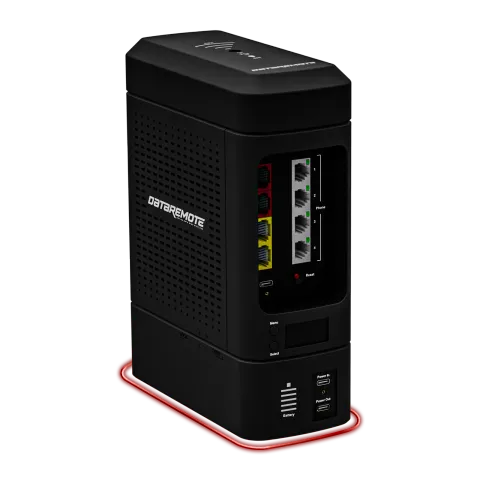 5G RedCap
 90X5
Modular POTS IN A BOX® / Business Gateway Platform
Modular PIAB and business gateway platform: Gigabit Ethernet Connectivity, 5G RedCap WWAN with LTE fallback, 4-8 FXS voice lines, and swappable power/battery modules. Built for telephone line replacement, fixed wireless access, and internet backup.
View specs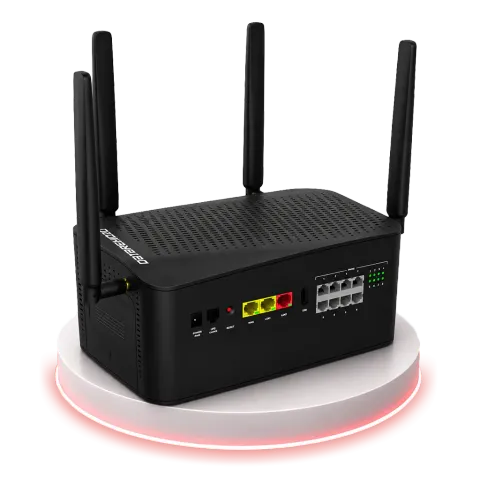 5G
5G 90X1
5G POTS replacement with automatic internet failover
Enterprise 5G appliance that replaces up to 8 analog POTS lines with an integrated ATA. Includes 48-hour battery backup, a global 5G radio, UPS power output, and automatic cellular internet failover.
View specs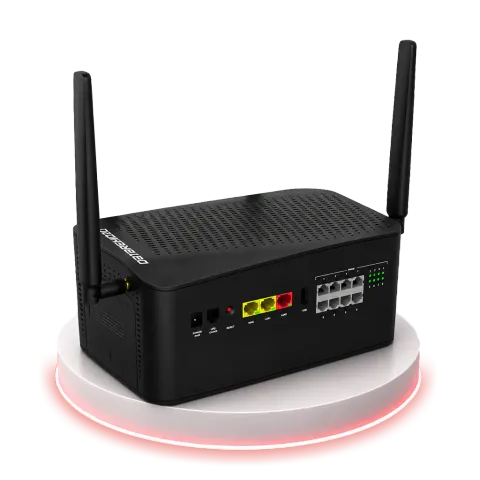 LTE
LTE 90X2
LTE POTS replacement with automatic internet failover
The LTE sibling of the 90X1. It replaces up to 8 analog POTS lines with an integrated ATA and adds patented UPS power output, 48-hour battery backup, and automatic cellular failover on North American LTE bands.
View specsSolutions
Purpose-built for the lines that can't go dark
Most deployed
POTS Line Replacement
Migrate copper voice, fax, alarm and elevator lines to a managed 5G/LTE appliance — preserving every signal your life-safety devices depend on.
Solution
Internet Backup & Cellular Failover
Up to 24–48 hours of battery backup, depending on model and load, with automatic cellular failover.
Learn more
Solution
Fixed Wireless Access
Primary or failover business internet over 5G/LTE, with automatic failover and battery backup baked in.
Learn more
Video
See it in action
Fire Alarm Signaling Demo Video — CDS-9090
Live demo: a fire/burglar alarm panel signals its central station through the CDS-9090 — DTMF signaling, line seizure and supervision preserved.
Watch with transcript (3:01)Frequently asked questions
Why do fire and burglar alarms still need a phone line?
Does POTS IN A BOX® preserve alarm signaling?
What about power and connectivity failures?
Is the hardware compliant for security and government use?
What is Alarm Auto Detect?
What is Alarm Inbound Programming?
Can alarm panels still be programmed remotely after a POTS line is replaced?
Compliance note: DataRemote equipment is designed to support code-governed applications; it does not by itself guarantee code compliance. Final acceptance of any installation may depend on the product model, endpoint compatibility, installation, configuration, carrier, monitoring provider, the code edition in force, the jurisdiction, and the authority having jurisdiction. Certification and listing records are model-specific; see each product page and the issuing organization's own records.
Protect your alarm communication before copper is gone.
Talk to a DataRemote specialist about transitioning your fire and burglar alarm panels to cellular POTS replacement.