AT&T PrimePath Discontinuance: How to Identify and Replace Affected Business Lines
Direct Answer
AT&T has asked the FCC for authority to discontinue business phone lines sold by its competitive local exchange carrier (CLEC) affiliates as PrimePath Service, or as Business Local Exchange Service with AT&T Business Network, OneNet Option, or ACC Business, throughout 34 states and the District of Columbia. If the FCC doesn’t intervene, AT&T may stop service on or after November 5, 2026, and AT&T’s customer letters ask businesses to arrange a replacement before October 30. Identify these lines by product name and service address, not by wire center. Move fire alarm, elevator, and other life-safety circuits first, and test each one on its replacement while the AT&T line still works. AT&T says the FCC has already found its lead replacement, Phone for Business – Advanced, to be an adequate replacement for business POTS. That is a finding about the voice service; whether a specific panel or elevator phone works on it has to be checked device by device.
Key Takeaways
- The scope is set by product and state. The application covers PrimePath, and Business Local Exchange Service associated with AT&T Business Network, OneNet Option, or ACC Business, sold by AT&T’s CLEC entities throughout 34 states and D.C. It lists no wire centers.
- One name is easy to confuse. AT&T Business Local Exchange Access Line Service is an incumbent-carrier product in a different proceeding with a different date: on or after November 15, 2026, in portions of listed wire centers.
- November 5, 2026 is a floor, not a cutover date. If the application is granted on schedule, approval and permission arrive the same day. AT&T’s letters name an earlier date, 10/30/2026, as the deadline for arranging a replacement. Neither document sets a per-line schedule, and lines under existing contracts are excepted.
- A replacement POTS line is unlikely to be available. AT&T states that no other providers offer legacy TDM-based voice in the affected area. Plan for a different technology.
- AT&T’s replacement covers the service, not your equipment. Phone for Business – Advanced runs primarily over AT&T LTE with a 24-hour standby battery that powers the AT&T device only. The filing doesn’t say which alarm panels, elevator phones, or fax machines it supports.
- Sequence by consequence of failure. Inventory, rank, choose a path per endpoint, install and test in parallel, cut over, document, and only then cancel the old line.
What this discontinuance covers
The dated record of the filing, including the applicant entities, the FCC public notice, the comment deadline, and the source documents, is in our newsroom: FCC Invites Comment on AT&T Application to Discontinue PrimePath and Other CLEC Business Phone Lines in 34 States and D.C. Check it for the current status of WC Docket No. 26-276. This guide covers what to do about it.
Three features of the application determine how a facilities or IT team should respond.
It’s about the product name. AT&T’s incumbent-carrier discontinuances have been drawn around wire centers, so the first question was where a building sits. This application is drawn around how the line was sold. It covers “traditional business landline phone service (sometimes known as ‘POTS’) sold by AT&T CLEC entities as PrimePath Service or as Business Local Exchange Service associated with AT&T Business Network, OneNet Option, or ACC Business,” and AT&T says it “will no longer offer the Affected Services throughout” the listed states.
It describes the service, not the cable. AT&T calls these “TDM-based access lines” for local, intrastate, and interstate calling. The application doesn’t say what carries them. AT&T’s customer letters mention its “aging copper network” in general terms, but nothing in the filing says what facility serves a given line. The cabling at your demarcation point is therefore not a reliable test of whether a line is covered. The product name is.
These are business lines. Every affected customer is a business end user, which is where alarm panels, elevator phones, fax machines, and dial-up equipment still sit.
How to tell if a line is one of these services
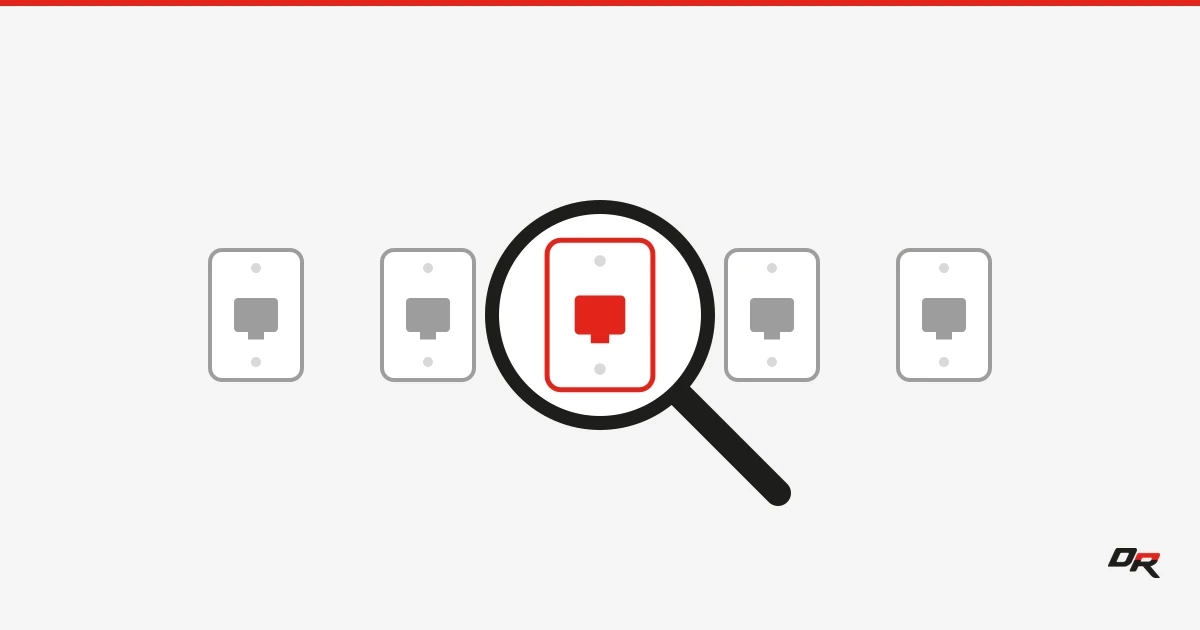
Work through the lines on each AT&T account in this order. The diagram shows the logic; the steps below show where to find each answer.
- Find the August 28, 2026 letter. AT&T says it mailed the notices required by 47 C.F.R. § 63.71 on August 28, 2026, after an earlier written notice in October 2025. The two sample letters filed as Exhibit 1 are on AT&T Business letterhead and headed “IMPORTANT NOTICE REGARDING PrimePath Service” or “IMPORTANT NOTICE REGARDING AT&T Business Local Exchange business lines associated with AT&T Business Network Service, OneNet Option and/or ACC Business,” each followed by “Service Discontinuance Effective 10/30/2026.” Each carries a table headed “Service Addresses Impacted by this Notice,” listing account number, service address, city, state, and ZIP. That table is the closest thing to a line list the filing provides. A letter mailed to the account may have reached accounts payable or a regional office rather than the people who maintain the equipment, so ask for it internally before assuming there isn’t one.
- Read the product name on the bill or contract. Look for PrimePath, or for Business Local Exchange Service tied to AT&T Business Network, OneNet Option, or ACC Business. If the bill doesn’t show it, ask your AT&T account team for a written list of every line on the account with its product name, line number, and service address.
- Check the legal entity. According to the letters’ footnotes, PrimePath Service is provided by Teleport Communications America, LLC and TC Systems, Inc. AT&T Business Network Service, OneNet Option, and ACC Business Service are provided by AT&T Enterprises, LLC and by AT&T Communications of Indiana, New York, Texas, and Virginia. All seven are AT&T’s CLEC affiliates, not its incumbent telephone companies.
- Confirm the service address state. The application covers 34 states and D.C., all of which appear in the first two rows of the state table below. The service area is statewide rather than a list of wire centers. The letters’ footnotes list the same states for the Business Network, OneNet Option, and ACC Business lines, and the same list minus Mississippi and New Hampshire for PrimePath.
- Note whether the line is under contract. AT&T asked to discontinue “except as provided for in any existing contracts,” and the letters say that where a contract “is inconsistent with the above, these planned changes may not apply to you.” A contract may keep a line in service past November 5, but only on the contract’s own terms. Get the end date for each contracted line in writing.
AT&T also says it grandfathered these services in the covered states in a 2021 filing, WC Docket No. 21-452. Grandfathering closes a service to new customers, so an affected line has usually been in place for years.
The name that causes the most confusion
Two AT&T business POTS products with nearly identical names are the subject of separate discontinuances, filed by different AT&T companies, with different dates and different rules of scope. The 26-276 letter refers to “AT&T Business Local Exchange business lines associated with AT&T Business Network Service, OneNet Option and/or ACC Business.” The incumbent-carrier product is AT&T Business Local Exchange Access Line Service.
| Detail | WC Docket No. 26-276 | WC Docket No. 25-335 |
|---|---|---|
| Service | PrimePath, or Business Local Exchange Service with AT&T Business Network, OneNet Option, or ACC Business | AT&T Business Local Exchange Access Line Service |
| Filed by | AT&T’s CLEC affiliates | AT&T’s incumbent carriers |
| Where | All of 34 states and D.C. | Parts of listed wire centers in 18 states |
| Earliest date | On or after November 5, 2026, if granted | On or after November 15, 2026 |
| Status | Pending as of October 19, 2026 | Deemed granted January 12, 2026 |
Which proceedings can reach a business line in your state
The two state lists overlap, so a company with several sites, or several kinds of line at one site, may be dealing with both. This table compares the 26-276 service area with the POTS application in WC Docket No. 25-335.
| Service address in | Proceedings that may cover an AT&T business POTS line |
|---|---|
| Alabama, Florida, Georgia, Indiana, Kansas, Kentucky, Michigan, Mississippi, Missouri, North Carolina, Ohio, Tennessee, Texas, Wisconsin | Both: 26-276 for CLEC lines anywhere in the state, and 25-335 for incumbent-carrier lines in listed wire centers |
| Arizona, Colorado, Connecticut, Delaware, D.C., Illinois, Iowa, Maryland, Massachusetts, Minnesota, Nebraska, Nevada, New Hampshire, New Jersey, New York, Oregon, Pennsylvania, Rhode Island, Utah, Virginia, Washington | 26-276 only, among these two |
| Arkansas, Louisiana, Oklahoma, South Carolina | 25-335 only, among these two |
AT&T has other discontinuance proceedings, including companion dockets for Remote Call Forwarding and copper-only AT&T Phone for Business, so an “only” in this table means only among these two applications.
What the November 5, 2026 authorized date means operationally
According to FCC public notice DA 26-1075, the application “will be deemed granted automatically on November 5, 2026, the 31st day after the release date of this public notice, unless the Commission notifies” AT&T otherwise. The authorized date in the notice’s appendix is “on or after November 5, 2026.” Six things follow for anyone running equipment on these lines.
There is no runway after approval. In AT&T’s incumbent-carrier proceedings, the grant came on January 12, 2026 and the authorized date was November 15, 2026, ten months later. Here the two dates are the same. If the application is granted on schedule, permission to discontinue starts that day.
Your letter says October 30. The August 28 letters are headed “Service Discontinuance Effective 10/30/2026” and tell customers to contact their account manager and “update your service before 10/30/2026.” That matches the date AT&T requested in the application. The FCC’s notice puts the authorized date at November 5 or later. Treat October 30 as AT&T’s deadline for choosing a replacement and November 5 as the earliest date the line can be discontinued.
“On or after” sets the earliest date, not the schedule. The letters say “We’ll send additional information regarding this transition,” but neither the letters nor the application sets a per-line disconnection date. Plan as though any affected line can stop working on any day from November 5 onward.
Contracts are the exception, and you have to prove yours. Lines covered by existing contracts are carved out of the requested date “as provided for” in those contracts. That protection lasts only as long as the contract says. Put the end date for each contracted line in the inventory, with the document that establishes it.
The FCC can still change the date. Before November 5 the Commission can notify AT&T that the grant won’t be automatically effective. The newsroom record tracks the outcome, and every filing is posted to the WC Docket No. 26-276 docket on ECFS. Don’t plan on intervention, though. AT&T says it has repeatedly received streamlined approval for similar business voice discontinuances.
A dead line usually stays silent. When a line stops working, the equipment on it rarely announces the problem to the people responsible for it.
- Fire alarm panel. Alarm, supervisory, and trouble signals stop reaching the supervising station. A panel that supervises its lines should show a communication trouble, but the supervising station may see only a missed test signal.
- Burglar alarm panel. Intrusion and trouble signals stop reaching the central station, with similar symptoms depending on how the account is configured.
- Elevator emergency phone. Two-way voice from the car to the answering point is lost, often unnoticed until the next periodic test or an entrapment.
- Fax machine. Transmissions fail in both directions. The first sign is usually a failed send or a document that never arrives.
- Gate entry, POS backup, and modems. Call-outs, dial-in access, and backup authorization stop, which tends to surface only when the primary path fails or someone tries to dial in.
Why you can’t simply order another POTS line
AT&T’s application states that “no other providers offer legacy TDM-based voice service in the Affected Service Area,” and that even within AT&T’s own incumbent footprint “the relevant ILEC may no longer offer POTS service to new customers.” The filing calls this a technology transition for that reason. Customers “may be required to replace their TDM-based voice service with a different technology or transmission medium.” Budget and plan for a replacement path, not a new copy of the old line.
What AT&T’s named replacements cover, and what they leave to you
The application names four alternatives, and adds that competitors offer voice in some or all of the area “via cable, fiber, fixed-wireless, satellite, CMRS, or over-the-top services,” CMRS being mobile wireless. Only one alternative carries the regulatory weight of the request: AT&T says its “request for streamlined treatment of this application rests upon the availability” of AT&T Phone for Business – Advanced.
- AT&T Phone for Business – Advanced, including the renamed AT&T Business Voice. According to the application, the FCC found it to be an adequate replacement for business POTS in earlier AT&T dockets. Its primary connectivity is AT&T LTE, though it “can work over any kind of Internet connection,” and it is sold as a service with an AT&T-owned and managed device at the premises and a 24-hour standby battery. AT&T lists it at $99.99 per month, against roughly $69 to $95 for the affected services, plus taxes, surcharges, and fees, and the filing notes that both may be before any volume or term discounts. What to confirm: which of your endpoints it supports, by make and model; whether 24 hours of standby meets what the code edition and the AHJ expect for that system; and whether the installed location stays within AT&T’s stated usage conditions.
- AT&T Office@Hand. Named as a replacement, not described. What to confirm: everything, starting with how analog equipment connects and whether your endpoints are supported.
- AT&T IP Flexible Reach. Named as a replacement, not described. What to confirm: the same.
- Mobile wireless from AT&T, Verizon, or T-Mobile. Described as broadly available. What to confirm: a phone or mobile plan doesn’t present an analog line to a fire panel or elevator phone, so those lines still need a device that does.
Phone for Business – Advanced: read the power disclosure closely
The service disclosure attached to AT&T’s customer notices is specific about power, and three of its statements matter for life-safety planning.
- The battery powers the AT&T device only. “The backup battery will power the APB-A service, but it will not power other customer owned equipment like medical and security-monitoring systems.” Your fire panel, elevator phone, and their own batteries remain your design problem.
- No power means no service, including 911. The disclosure warns that “if the device does not have electrical or battery power, APB-A service will not work, including emergency 911 service.”
- It has usage and storage conditions. The device “should be used inside the business location, keeping the internal temperature between 32 °F and 113 °F,” and AT&T warns that higher or lower temperatures “could adversely impact the duration of backup power available from the battery.” Check that against where the line actually terminates. Rooftop machine rooms, parking structures, and gate pedestals are common places for analog lines to land.
AT&T also says that if the device or battery fails, it will replace the device for as long as the customer keeps the service, and that no battery testing is necessary while the service is active. Neither statement changes the testing your monitoring company, elevator contractor, or AHJ requires of the system the line serves.
An adequate-replacement finding is not a device approval
The FCC’s adequate-replacement test, part of the framework described on our FCC network modernization rules page, decides whether a carrier may withdraw a legacy service on a streamlined basis. It is not a listing for your alarm communicator and doesn’t substitute for acceptance testing. Fire alarm transmission paths are governed by NFPA 72 as adopted in your jurisdiction, and elevator emergency communication by ASME A17.1/CSA B44. In both cases the authority having jurisdiction decides what is acceptable in a given installation. Our guides to replacing alarm panel lines and elevator emergency phones cover what each endpoint needs from its line.
How to sequence the migration
The order below assumes the AT&T line keeps working until you cancel it, which may not hold after November 5. The later you start, the more each step has to run in parallel with the others.
- Build the line list. For every AT&T account, record each line’s number, product name, service address, contract end date if any, and the device on the far end. Use the August 28 notice, the bill, the account team’s list, and a physical walk that traces each line from the demarcation point to the equipment and labels both ends. Ask the alarm company and the elevator contractor which line numbers their equipment uses. A line with an unidentified far end is an open item, not a candidate for cancellation.
- Rank by consequence of failure. Life-safety lines go first: fire alarm panels, elevator emergency phones, area-of-refuge stations, and emergency call boxes. They depend on third parties whose schedules you don’t control. Security and revenue lines come second, including burglar panels, fax used for clinical or legal records, and POS or ATM backup. Telemetry and convenience lines come last.
- Choose a replacement path per endpoint, not per site. A carrier voice service, a generic VoIP adapter, and a purpose-built analog gateway behave differently on line voltage, disconnect supervision, DTMF timing, and fax tones. Where a fire alarm communicator is involved, confirm the path with the alarm company and the AHJ before ordering.
- Book the third parties now. The supervising station has to update the account. The elevator contractor may need to reprogram the phone. The AHJ or elevator inspector may need to witness a test. Each has its own lead time.
- Install in parallel and test end to end. Put the replacement in while the AT&T line still works, move one endpoint at a time, and test it against its own pass criterion (see the table below). Dial tone proves only that the port works.
- Document, then cancel. Record results for the AHJ and the monitoring company. Then cancel the AT&T line by number, and confirm the cancellation doesn’t affect other lines on the same account.
- Monitor the new path. Put the replacement under remote monitoring so a failure raises an alert instead of waiting for the next inspection to find it.
| Endpoint | Pass criterion, and who confirms it |
|---|---|
| Fire alarm panel | Supervising station receives alarm, supervisory, and trouble signals by account and zone, and the next periodic test arrives on schedule. Confirmed by the alarm company and supervising station, and the AHJ as required. |
| Burglar alarm panel | Central station receives the test signals by account and zone. Confirmed by the alarm company and central station. |
| Elevator phone | Two-way voice from inside the car to the answering point, which can tell which building and car is calling. Confirmed by the elevator contractor and answering point, and the inspector as required. |
| Fax machine | Multi-page send and receive, checked page by page at the far end. Confirmed by whoever owns the fax workflow. |
| POS, ATM, modem, gate entry | A full transaction or session on the backup path. Confirmed by the equipment owner or vendor. |
Questions to put to AT&T in writing
- Which lines on this account are in WC Docket No. 26-276, by number, product name, and service address?
- Does any contract keep a line in service after November 5, 2026, and until what date?
- For Phone for Business – Advanced: which of our endpoints, by make and model, does AT&T support, and what standby and talk time should we expect under our load?
- Can the replacement be installed and tested before the existing line is removed?
- Can the existing numbers move to the replacement, and will cancelling one line affect any other line on the account?
Where to start
Send us your AT&T service addresses and a list of the equipment on each line. DataRemote’s engineers will map each fire, elevator, fax, and telemetry circuit to the right POTS IN A BOX® model and return a cutover plan sequenced by risk. Contact us to begin.
How DataRemote helps
DataRemote builds the POTS IN A BOX® appliances that carriers and integrators use to keep analog equipment working when the line underneath it is discontinued. Our POTS line replacement solution covers the full approach. Three points are specific to AT&T’s CLEC discontinuance.
AT&T-certified hardware, with or without an AT&T service. The 90X1, 90X2, VAB-1, CDS-9010, and CDS-9090 hold AT&T network certification. DataRemote devices and software are also used with AT&T Business Voice and AT&T Phone for Business – Advanced, under the end user license agreement published on this site. Choosing AT&T’s service and choosing a DataRemote appliance are not mutually exclusive.
The analog interface your equipment expects. The appliances’ FXS ports supply standard loop voltage, dial tone, and ringing to the equipment already on the wall and carry its DTMF signaling, so an existing panel, elevator phone, or fax machine connects to the gateway the way it connected to the old jack. The 90X1 and 90X2 each provide eight FXS lines and an internal battery rated for up to 48 hours of standby, plus a UPS output for approved connected devices. The 90X1, 90X2, and VAB-1 are certified to UL 864, and certification and listing details for each model are on our compliance page. For specific endpoints, see fire and burglar alarm communication and elevator emergency communication.
Visibility after cutover. The appliances can be managed and monitored in the Ara platform, so a failed line at a remote site becomes an alert to your team rather than something an inspector or occupant discovers.
Compliance note: DataRemote equipment is designed to support code-governed applications; it does not by itself guarantee code compliance. Final acceptance of any installation may depend on the product model, endpoint compatibility, installation, configuration, carrier, monitoring provider, the code edition in force, the jurisdiction, and the authority having jurisdiction. Certification and listing records are model-specific; see each product page and the issuing organization's own records.
Where this fits in AT&T’s wider transition
WC Docket No. 26-276 is one of several AT&T proceedings retiring legacy services, and the others are drawn differently: by wire center, by incumbent affiliate, and with their own dates. For the broader program and how its timelines have played out, see AT&T Copper Retirement: What It Means for You. For non-alarm equipment such as fax machines and card terminals, our guide to migrating fax, POS, and ATM lines covers the endpoint-specific tests. Then start the line list. It is the step every later decision depends on.
Frequently Asked Questions
Look for three things. First, the customer letter AT&T mailed on August 28, 2026, headed either "IMPORTANT NOTICE REGARDING PrimePath Service" or "IMPORTANT NOTICE REGARDING AT&T Business Local Exchange business lines associated with AT&T Business Network Service, OneNet Option and/or ACC Business," which lists the account numbers and service addresses it covers. Second, the product name on the bill, contract, or account record: PrimePath Service, or Business Local Exchange Service associated with AT&T Business Network, OneNet Option, or ACC Business. Third, the service address, which must be in one of the listed states or the District of Columbia. If you can't confirm the product name, ask your AT&T account team for a written list of every line on the account with its product and service address.
Not necessarily on that day. FCC public notice DA 26-1075 says the application will be deemed granted on November 5, 2026 unless the Commission notifies AT&T otherwise, with discontinuance authorized on or after that date. AT&T's August 28 letters give an earlier date, 10/30/2026, and ask customers to update service before then. Treat October 30 as AT&T's deadline for arranging a replacement, November 5 as the earliest date the FCC authorizes discontinuance, and any affected line as able to stop working at any point from then on. Lines covered by existing contracts are excepted on the contract's own terms.
AT&T's application says the FCC found Phone for Business – Advanced to be an adequate replacement for business POTS in earlier dockets. That is a finding about the voice service. The filing does not say which alarm panels, elevator phones, or fax machines work on it, and AT&T's own disclosure states its 24-hour backup battery powers the AT&T device but not customer-owned equipment such as security-monitoring systems. Whether a specific life-safety endpoint works on it, and is acceptable to the authority having jurisdiction, has to be confirmed for that installation.
No. The November 15, 2026 discontinuances were filed by AT&T's incumbent carriers, cover portions of named wire centers, and include a service with a similar name, AT&T Business Local Exchange Access Line Service. WC Docket No. 26-276 is filed by AT&T's competitive carrier affiliates, covers PrimePath and Business Local Exchange Service associated with AT&T Business Network, OneNet Option, or ACC Business, and applies throughout 34 states and D.C. A business in a state that appears in both proceedings can have lines in each, with different dates.
Probably not. AT&T's application states that no other providers offer legacy TDM-based voice service in the affected service area, and that in some locations the incumbent carrier may no longer offer POTS to new customers. It points instead to competitors offering voice over cable, fiber, fixed wireless, satellite, mobile, or over-the-top services. Plan for a replacement that uses a different technology, such as managed cellular, fiber, cable, or another IP-based service, rather than for a like-for-like copy of the existing line.
Confirm the line is in scope, then call the alarm company or elevator contractor that services the equipment and agree a replacement path and test plan. Install the replacement while the AT&T line still works, test the endpoint end to end with the supervising station or answering point, and document the result for the authority having jurisdiction before cancelling the old line.
Related
Products
Platform
Certifications
Definitions
Have PrimePath or CLEC business lines in the 34 states?
Talk to DataRemote's engineers about keeping fire panels, elevator phones, and fax machines working on AT&T-certified POTS IN A BOX® appliances, whether or not you stay on an AT&T voice service.