Transforming Retail Communications with DataRemote's POTS IN A BOX®

Direct Answer
DataRemote’s POTS IN A BOX® replaces the aging copper POTS lines behind retail point-of-sale, security, and alarm systems with a cellular appliance that adds battery backup, 5G/LTE connectivity, and automatic failover — keeping registers and security systems online through power or internet outages, without replacing the equipment already in place.
Key takeaways
- Retail locations still running copper POTS lines face high maintenance costs, limited functionality, and vulnerability to outages.
- POTS IN A BOX® adds battery backup and 4G/5G LTE connectivity, keeping POS and security systems operational during outages.
- Multiple line support and remote management let chains centralize communication across locations.
- The solution scales as a business grows — additional lines or sites can be added without a system overhaul.
- Real-world deployments span grocery stores, boutiques, and multi-location chain stores.
The retail communication challenge
Retail environments demand robust communication systems to manage everything from point-of-sale transactions and inventory management to security and customer service. Traditional POTS lines, however, come with real challenges:
| Challenge | Impact on retail operations |
|---|---|
| High maintenance costs | Aging copper lines are expensive to maintain and repair, with rates rising as carriers deprioritize the network. |
| Limited functionality | Traditional POTS lacks the advanced features modern retail operations increasingly rely on. |
| Vulnerability to outages | Power and internet outages can disrupt communication — and revenue — at the point of sale. |
POTS IN A BOX®: a retail game-changer
DataRemote’s POTS IN A BOX® is designed to seamlessly replace traditional POTS lines, giving retailers a modern, reliable, and cost-effective alternative.
Cost efficiency
Switching to POTS IN A BOX® reduces operational costs by eliminating costly copper line maintenance and leveraging more affordable digital infrastructure. The device is also easy to install and manage, minimizing the need for expensive technical support.
Advanced features for modern retail
- Multiple line support — manage multiple communication lines with ease, ensuring different departments or locations stay connected.
- Remote management — monitor and manage the communication system remotely for quick adjustments and troubleshooting.
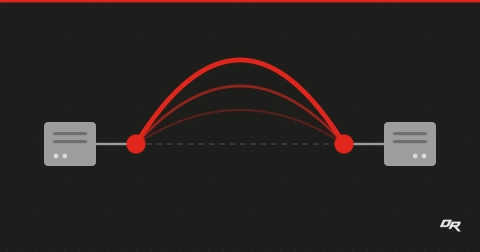
- Failover capabilities — integrated failover automatically switches to backup systems during an outage, maintaining uninterrupted service.
Uninterrupted service
Retail operations can’t afford downtime. POTS IN A BOX® ensures continuous communication even during power or internet outages, thanks to built-in battery backup and 5G/LTE connectivity. Critical systems like point-of-sale and security remain operational, protecting revenue and customer trust.
Scalability for growing businesses
As a retail business grows, so do its communication needs. POTS IN A BOX® is designed to scale — adding more lines or upgrading the system to meet increasing demand — so the investment continues to deliver value as the business evolves.
Certifications that matter for a store’s regulated lines
A retail location’s analog lines aren’t all equal in the eyes of an inspector. The alarm and life-safety circuits are governed by code and signed off by your Authority Having Jurisdiction, so the replacement’s certifications determine whether the migration passes review. DataRemote’s 90X1, 90X2 and VAB-1 carry UL-864 certification for fire alarm system use, and the shipping POTS IN A BOX® line — 90X1, 90X2, VAB-1, CDS-9090 and CDS-9010 — is California State Fire Marshal listed, which streamlines approvals in California and often carries weight with AHJs in states that recognize those standards. For payment lines, note that telephone-based card processing carries its own compliance obligations independent of the transport — see our guide to migrating fax, POS and ATM lines.
Which lines in a store are still on copper?
Most retail POTS inventories come back longer than the operator expected, because the lines were installed by different vendors over many years and nobody owns the full list. In a typical location, expect to find some combination of:
- Fire alarm panel communicator — code-required, and the line most likely to trigger a compliance problem if it fails.
- Burglar / intrusion alarm — often a separate line and a separate monitoring contract from fire.
- Dial-backup POS terminals — the fallback path when the primary network is down. If this is sitting on dead copper, the redundancy is theoretical.
- ATM or cash-recycler line — frequently an off-premise or vestibule unit on its own analog circuit.
- Elevator emergency phone — in any multi-level store, code-required two-way communication.
- Fax — still live in receiving, pharmacy, and back-office workflows.
- Refrigeration, HVAC and building-control modems — in grocery especially, these dial out on temperature excursions.
- Ring-down and courtesy phones — dedicated circuits with no dial pad.
The pattern worth noticing: only one or two of these are things a customer would ever see. The rest are infrastructure, which is exactly why they get missed until they fail.
Grocery and 24-hour formats are the hard case
Two things make grocery and other always-open formats harder than a boutique or a mall store.
There is no maintenance window. A store that never closes has no natural time to cut over a line, so the migration has to be genuinely non-disruptive rather than scheduled around closing. A drop-in replacement helps here because the endpoint doesn’t change — but the cutover still needs to be planned per line rather than per store.
Refrigeration alarms are revenue-critical, not just operational. A temperature-excursion alarm that can’t dial out is a spoilage event nobody was warned about. These lines rarely appear on an IT inventory because they were installed by a refrigeration contractor, not the telecom vendor. Ask the facilities team specifically what dials out, and from where.
Rolling out across a chain
For a single store, POTS replacement is a work order. Across a footprint it’s a program, and the sequencing determines whether it goes smoothly:
- Pilot your messiest format first. Choose the store with the oldest alarm panel and the least documentation. What you learn there becomes the template; a clean new-build store teaches you nothing about the hard cases.
- Group stores by format, not region. Stores built to the same prototype have the same lines, panels, and wiring. Region matters for scheduling technicians; format determines what you order and how you test.
- Sequence by exposure. Stores in areas where copper retirement is already moving, and stores with the most code-required lines, go first. Locations with mostly back-office voice can wait.
- Standardize the per-store acceptance test. Same checks, same order, documented every time — so a regional manager can confirm a store is genuinely done rather than reportedly done.
What to verify before you call a store complete
Dial tone is not an acceptance test for a store, because most of these lines never make a voice call. At minimum, per location: place a supervised test with the alarm monitoring center and confirm receipt; run a live authorization and a batch settlement on any dial-backup terminal; complete a full transaction on the ATM; send a multi-page fax to a real destination; and trigger a test condition on any refrigeration or building-control line to confirm the alert actually arrives. Then confirm battery backup and failover behave as expected — before the copper is cut, not after.
Why a dead line costs more in retail than the line is worth
The monthly charge on a copper line is the least interesting number in a retail POTS decision. What matters is what stops when the line does.
A fire alarm communicator that can’t reach its monitoring center is a compliance exposure that accrues for as long as it stays down. A dial-backup payment terminal on a dead line converts a designed redundancy into a false assumption — discovered on the day the primary network fails, which is the worst possible day to find out. A refrigeration alarm that can’t dial out doesn’t announce itself at all; the loss shows up as inventory. And a store that can’t take payment doesn’t lose a transaction, it loses the customer standing at the counter.
That asymmetry is the argument for migrating proactively rather than at renewal. The saving from retiring copper is real and recurring, but it’s the smaller half of the case. The larger half is that the lines quietly holding up compliance, loss prevention, and payment fallback stop being dependent on infrastructure the carrier has already decided to stop maintaining.
Real-world impact
Retailers across sectors are already putting POTS IN A BOX® to work:
- Grocery stores — reliable POS and security systems during peak shopping times, even through outages.
- Boutiques — seamless communication for inventory management and customer service.
- Chain stores — centralized communication management across multiple locations, reducing operational complexity and cost.
Streamline retail communications with DataRemote
In a fast-paced retail environment, reliable and cost-effective communication is essential. DataRemote’s POTS IN A BOX® combines advanced features, reliability, scalability, and cost savings — helping retailers improve operational efficiency, protect customer experience, and secure their business against disruption. For outage resilience specifically, see how the 90X1 stormproofs your internet connection with automatic cellular failover. See how it fits your POTS line replacement plan, or talk to our team about a deployment sized to your footprint.
Frequently Asked Questions
Point-of-sale terminals, security systems, and some alarm panels in retail locations were historically wired to analog POTS lines, and many locations still run that original wiring even as carriers raise copper rates and reduce maintenance.
POTS IN A BOX® includes built-in battery backup and 5G/LTE cellular connectivity, so point-of-sale and security systems keep operating through a power or internet outage instead of going dark at the register.
Yes. It supports multiple line configurations and remote, centralized management, so a chain can add locations or lines and manage the whole footprint from one platform rather than site-by-site.
No. POTS IN A BOX® is designed to be a drop-in replacement for the copper line itself — existing POS terminals, alarm panels, and phones continue to connect the same way they always have.
Related
Solutions
Definitions
Ready to modernize your retail locations' phone lines?
See how POTS IN A BOX® protects POS and security systems across single or multi-location retail footprints.