
Source attribution: This post is adapted from the Orlando Sentinel release. Read the original article
The FCC has finally given telecommunications companies the green light to retire the copper landlines that power everything from house phones to security alarm systems. In April of this year, AT&T Florida filed a public notice of retiring their copper network in the state. This affected several areas, including a wire center here in Orlando, where the copper facility locations were impacted and AT&T must migrate customers to a digital interface.
In other states, the pushback has been passionate, with concerns that the elderly and rural populations will be stranded, or that critical analog systems will be less resilient in an emergency.
Why Florida’s Copper Network Is No Longer Sustainable
The fear is that Florida is not ready for this transition and that no true alternative exists. The reality, however, is the current status quo is no longer viable.
The analog landlines we use today rely on the same copper-wire network technology developed over 100 years ago. There are estimates ranging from 35 million to 50 million landlines still running across the U.S., with only 5% of the actual infrastructure being used by customers today.
Inertia has maintained its relevance, but it requires constant investment in upkeep and potential environmental concerns. Maintenance costs have grown exponentially, and all those costs eventually result in higher fees for Floridians. At some point, the dwindling base of users will not be able to support the costs associated with maintaining those lines.
Digital Alternatives Already Exist
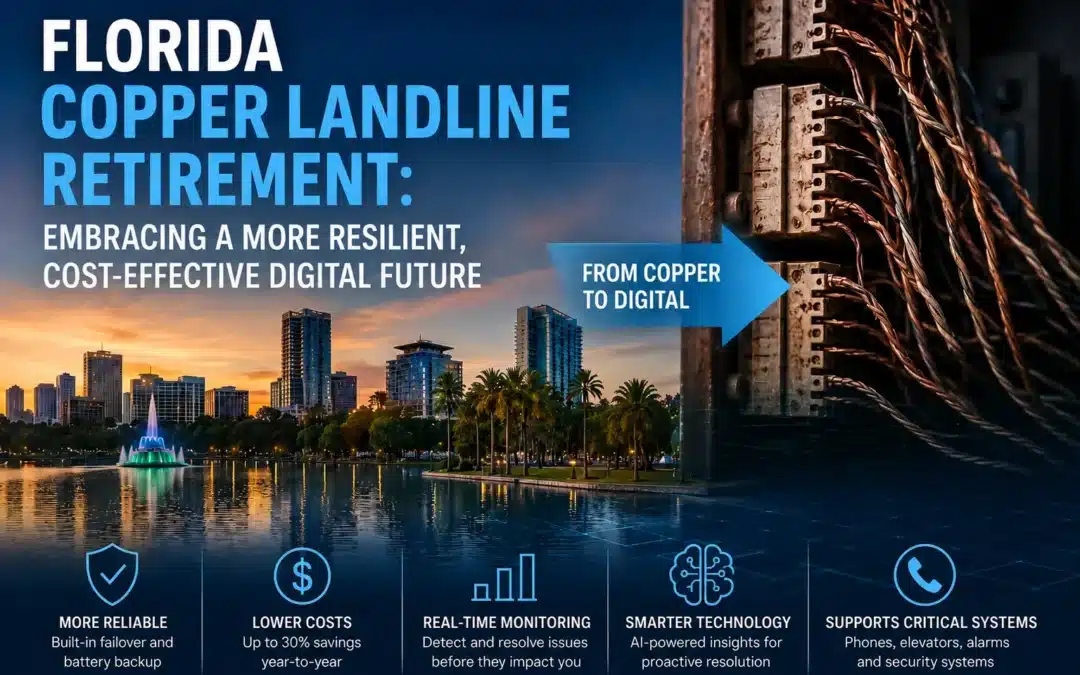
And there is really no need to hang onto analog landlines when viable digital alternatives already exist. They are significantly less expensive to maintain, more reliable and provide additional features.
How POTS Replacement Supports Critical Building Systems
For commercial buildings, a special box can be installed in their telephony room that uses a digital IP signal to power their phone, elevator, alarm and security systems.
A failsafe is built in for power outages, so if the main line goes down, the box can automatically reroute the signal to an alternative broadband or cellular service without interruption, all while operating on its integrated battery backup.
Why Digital POTS Replacement Is More Resilient Than Copper
Line quality can also be continuously monitored in real time to detect and solve problems, rather than wait days or weeks for a technician to repair an old copper line.
You can even layer artificial intelligence on top to automatically anticipate and resolve potential issues without human intervention. These are all critical, potentially life-saving functions that analog lines simply cannot offer.
The math also makes sense. These digital boxes are cheaper to run and maintain. Industry estimates place it at a 30 percent cost savings year-to-year over copper.
Why There Is Pushback Against Retiring Analog Landlines
So, with a viable alternative out there, why has there been so much pushback to getting rid of analog landlines? It is the optics of the situation.
People do not like change, especially for something that has been tried and true for so long. However, the hard truth is that these lines have reached their natural end of life.
As these fraying wires age into disrepair, critical infrastructure will be at risk of failure, no different than roads, bridges and tunnels without proper upkeep.
Copper Infrastructure Needs Modernization, Not Patching
The U.S. is making the largest federal investment in network infrastructure in decades, with broadband being looked at. The same should apply to our copper landlines.
It no longer makes sense to patch something that fundamentally needs to be retired. In the end, we can better serve and protect the public with a digital IP system than a copper one.
Florida Must Prepare for the Digital Telecom Transition
Will copper landlines disappear overnight in Orlando? No, but people are still unaware that other options exist and the impact that a deteriorating telecom infrastructure will have on them.
We need to embrace this new digital era. Our continued dependence on a centuries-old technology is not practical, particularly when a more cost-effective and resilient long-term alternative is already readily available.
Get device recommendations, specs, and deployment guidance.